Today faculty introduced us to the gestalt’s law and its principles. One of the most important underlying ideas behind the gestalt principles of visual perception. Gestalt theory is based on the idea that the human brain will attempt to simplify and organize complex images or designs that consist of many elements.There are five individual principles commonly associated with gestalt’s theory:-
- Principle of similarity – In this principle, similar elements are visually grouped, regardless of their proximity to each other. They can be grouped by color, shape, or size. Similarity can be used to tie together elements that might not be right next to each other in a design.
- Principle of proximity – Proximity refers to how close elements are to one another. The strongest proximity relationships are those between overlapping subjects, but just grouping objects into a single area can also have a strong proximity effect.
- Principle of closure – The principle of closure allows your eye to follow something like a dotted line to its end. But more complex applications are often seen in logos, like that for the World Wildlife Fund. Large chunks of the outline for the panda are missing, but your brain has no problem filling in the missing sections to see the whole animal.
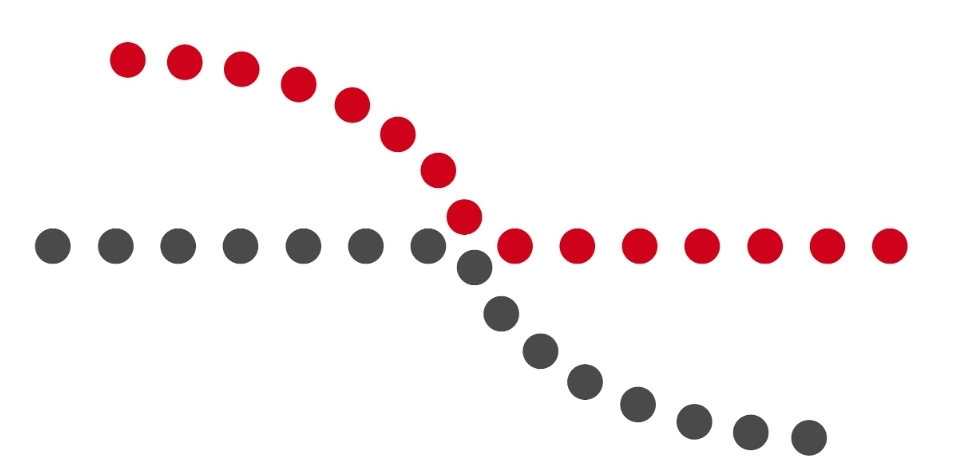
- Principle of continuation -The law of continuation posits that the human eye will follow the smoothest path when viewing lines, regardless of how the lines were actually drawn.
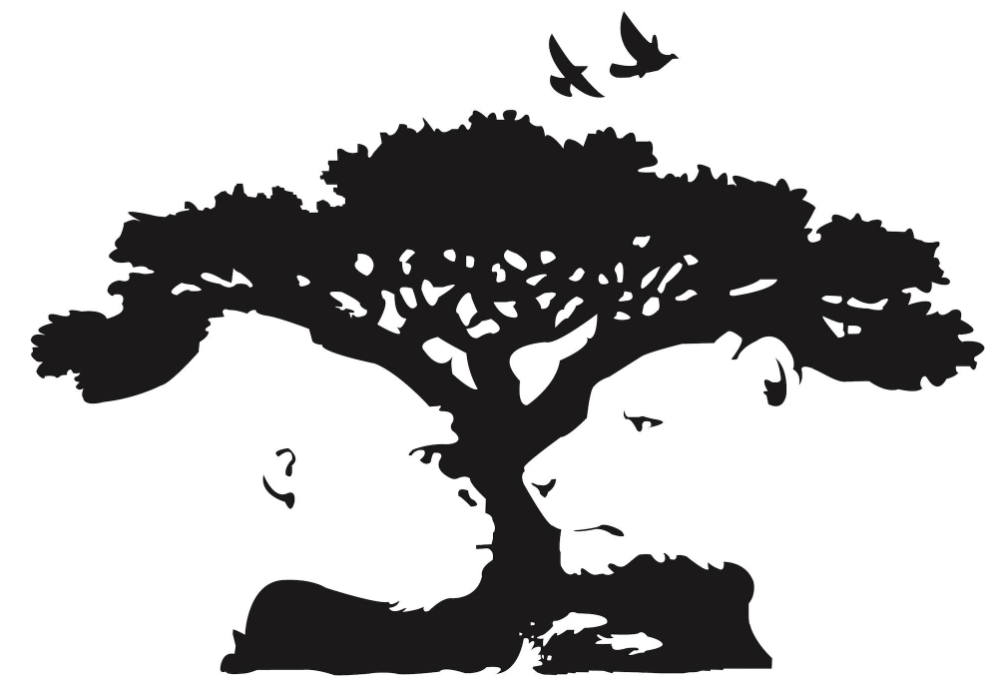
- Principle of figure/ground -The principle of figure/ground is similar to the closure principle in that it takes advantage of the way the brain processes negative space.Your brain will distinguish between the objects it considers to be in the foreground of an image (the figure, or focal point) and the background (the area on which the figures rest). Where things get interesting is when the foreground and background actually contain two distinct images.



After the gestalt’s principles, faculty introduced us with the pathfinder tool. In this tool, there are 4 options- Unite, Intersect, Subtract and Divide. We can unite, intersect, subtract or divide any 2 objects as we want.
So at the end of class we began with pen tool. The simplest path you can draw with the Pen tool is a straight line, made by clicking the Pen tool to create two anchor points. By continuing to click, you create a path made of straight line segments connected by corner points. You create a curve by adding an anchor point where a curve changes direction, and dragging the direction lines that shape the curve. The length and slope of the direction lines determine the shape of the curve.

 Aditi jaiswal's blog